

It took Morgan 33 years to make it to The Last Frontier.
Following our obligatory photos on the border and crossing at Alcan Border, we plowed on, cutting south at Tok and picked up Highway 4 at Glennallen, where we rested for a bit and popped through the Caribou Hotel for a quick bite. We heard the sad news that it burned recently, but are happy to hear they plan to rebuild! We kept on, needing to make up time from some of our adventure stops, and camped at the rest area just beyond Chitina River Bridge at the entrance to the McCarthy Road of Wrangell-St. Elias National Park – the undisputed king (or queen!) of the NPS system in terms of size. It’s commonly said that it’s larger than Yosemite and Yellowstone combined, plus Switzerland… but this feels like a weird slight to Switzerland. For better context, at 13.2 million acres, WRST is bigger than 9 US states. Hawaii AND Massachusettes could fit inside of it snugly. Nuts. Also, by car, you gotta want it.


The next day, we woke up and did a deep clean of the van, which we *try* to do every two weeks or so, punctuated by periodic “blowouts” with our trusty Bosch to keep pet hair to a minimum. This does not keep the pet hair to a minimum (nothing can), but it does help. Plus we like that the technique was shared with us by the late Leslie Peek. We love her for it, and so so so many other things. With a fresh interior, we made the magical drive into Wrangell on the gravel road, which was completely drivable in 2wd and low-clearance, with some washboarded sections late season. Fall was peaking, and we saw amazing leaf color and fireweed on the mountainsides that provided incredible contrast with snowcapped peaks.
Left: Angus needs constant distraction
during cleaning days.
And attention all other days.

We got into McCarthy and accidentally drove the private bridge into town… Two kind locals asked, “You lost or live here?” as those were seemingly the only options in such a remote place. They told us we could pretty much have the run of the town and to “seize our moment” to drive all around the place, but not wanting to be intrusive we camped along the road just outside of the park boundary in the preserve, where dispersed camping is allowed off season. Or at least not regulated…


Each day, we drove in, parked at the visitor center, and e-biked to our objective, which was great as we covered over 50 miles on nice trail in the park fairly quickly throughout our stay. On the first day, we biked to Kennecott, the fascinating, copper mining ghost town.

Several mines are in the area, but the biggest strike was the aptly named Bonanza Mine, which would hold title of richest copper strike for a few years before massive deposits in Chile would be found in 1915. What separates the Bonanza Mine though was the grade of the ore: basically the amount of pure copper present vs. the other stuff that would be discarded as tailings. Kennecott Mine’s ore was an eye-popping ~70% purity. For contrast, many of the worlds megamines of copper have ore grades of <2% (Chile’s Chuquicamata and others), ~3% (Kamoa-Kakula in DRC, and Grasberg in Indonesia). The only modern mine even close is Canada’s Sudbury Mine, at 8% purity. The purity is actually how the mine was found, as mineral scouts to the area could visibly see the green oxidation from the Wrangell Valley, so thick it looked like an out-of-place alpine meadow from afar. The value of the copper mined is ~$5 Billion USD in 2025 dollars, and the high-grade is owed to the unique geology of the deposit, discomformably wedged between a Triassic Limestone and a Permian Greenstone. The buildings in the main mining area now house local shops, guide services, and NPS facilities. Passing through the town is amazing and a true step back in time.
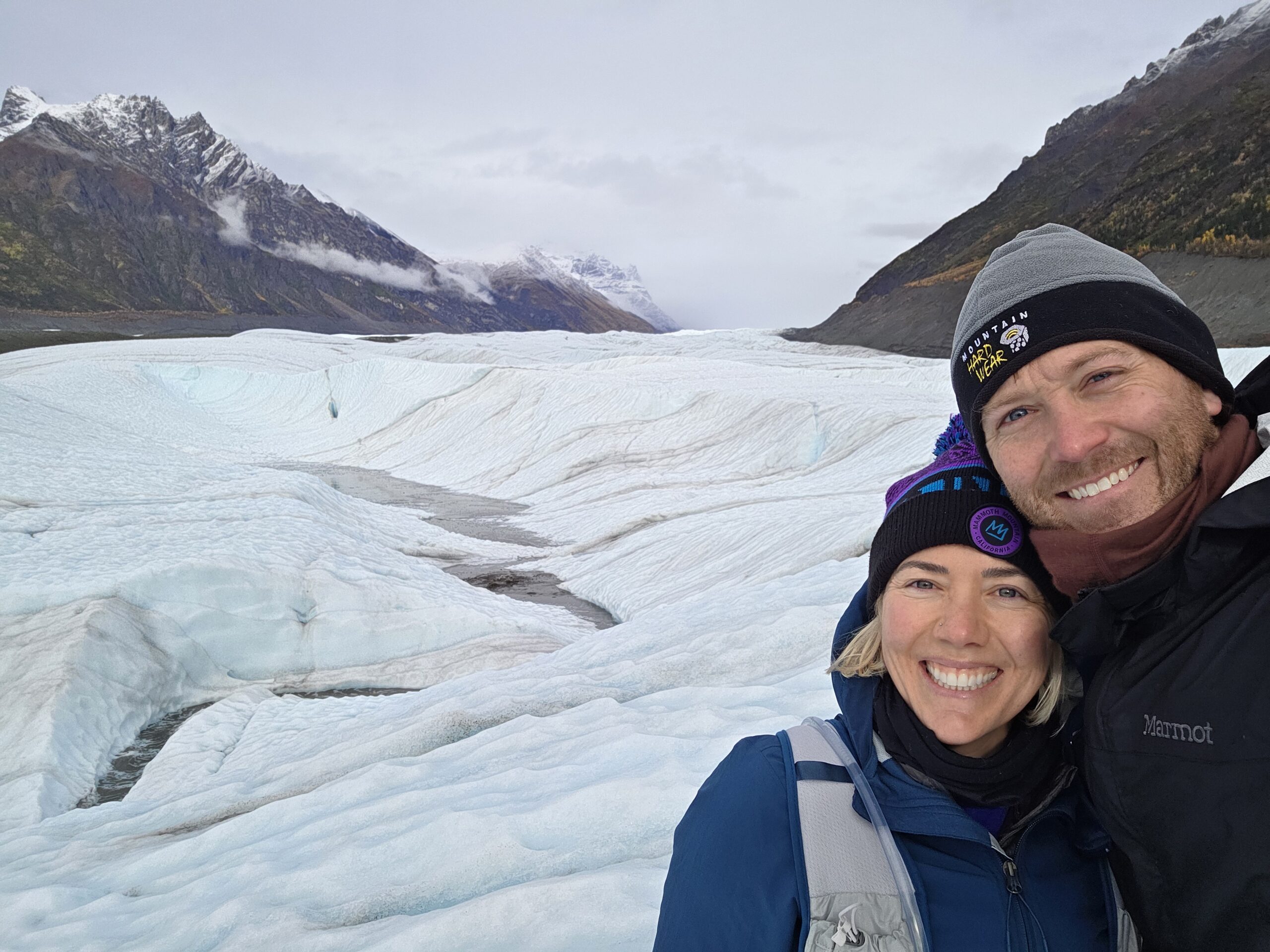
We took the Root Glacier Trail, a ~6 mile out-and-back from Kennecott, biking as far as possible, which ended with a mile or so of glacier trekking, for which we were happy to have traction. It was serene and beautiful, but katabatic winds were stiff and our feet were well popsicled after an hour or so of tromping around. On the way back, our path was blocked by a fat grizzly munching on soapberries who we watched nervously for 10-15 minutes until it was well clear.

We biked back and cooked dinner at the visitor center before catching a beautiful sunset over the Chitina River Valley. The next day, we repeated the approach, this time opting to hike to the Bonanza Mine. This trail is absurdly steep, clocking in at ~4,000 foot gain over 8.4 miles. Once again, our e-bikes took a big bite out of the approach, as the trailhead is ~6.5 miles from the visitors center, our basecamp for day trips. The mine is super cool and the infrastructure up there is really an engineering marvel. A few houses represent the miners camps. Blue-green copper ore is still strewn about the area everywhere you look.


On our hike up, we briefly passed a family of moose just off the trail, which was slightly more nervewracking than the bear the day before. Knowing they still stood between us and home, we gingerly hiked back the windy gully that makes up much of the lower trail, nervous any corner would bring us face-to-face. We needn’t have feared, though. We found them right where we left them, munchin’ on treats. The bull stared us down as we snapped a few photos, ensuring we were no threat to its calf.

Back to the pets and headed out of the park, gawking at the scenery as the sun set. We camped again at the lovely site on the west side of Chitina Bridge. At this point our next planned stop was Anchorage, but we checked the weather and saw a splitter day on the forecast up in Fairbanks. So decided to pivot to Denali, hoping to catch a good glimpse. That’s one of the best things about van travel…leaving when you have seen enough, staying longer when you fall in love, and going with the flow when conditions change.
We made the long drive up, and ravenously ate dinner at dinner at East Ramp Pizza before restocking in Fairbanks at Costco (one has to be very choosey and good at packing if shopping in Costco while living in a van).

We were surprised that even in a city like Fairbanks, the campgrounds were mostly closed except the Lazy Moose in North Pole, just east of town, so we backtracked there. We met the owners, Brett and Pam, who told us our timing was great as they were shutting down water for the season the next day! We got hot showers, Nessie dyed her hair pink, we cleaned the van, filled water, and charged batteries. The campsite is great and the only one open during shoulder season, seemingly. We also met a kind couple from Korea who were camping there. The woman borrowed Nessie’s hairdryer and then returned it with this ramen.

The next morning, we did a few more errands, going to Woodway to get a carburetor for our generator, which had crapped out. Had lunch at Yes! Noodle Soup (we were in a big town with diverse food options, so we indulged).
Then onto Denali, where our anticipation built with each cloud that disappeared, giving way to bluebird sky and glimpses of Denali along the way. The park road was only open to Mile 30, so we started the drive, passing moose and taking small strolls along the way at pull-outs. We got to the end, where we hopped on e-bikes for another 10 miles or so.

The solitude was amazing. We wrapped up the day by parking near mile 20 atop a hill and watching the sunset against the mountainous backdrop.

That’s Denali in the distance (over the hood of Noodles).

Then we took advantage of free camping in the almost empty Riley Creek Campground, a huge benefit of offseason. On trails in Alaska, Tally was noticeably more cautious. Sometimes she’d lean out over the trail, but not take her toes off it, to get a sniff. “There’s like…predators out here,” she said, probably. We woke up around 2am for northern lights viewing, but clouds had come in and no dice. Our takeaway on northern lights is that the KP index forecasting is equal parts science and guesswork… when high numbers like 7 or 8 were listed, it was a given if skies were clear. But sometimes a KP rating of 2 would produce spectacular views and a 4 would have nothing…that’s part of the magic of it, we suppose!

Pleased with our charmed viewing of Denali, we headed on in steady rain for Talkeetna. Talkeetna is a vibe, which we had been told, but seeing it yourself is always cool. We had coffee at Conscious Coffee and brews at Denali Brewing Company, well-loved stops by locals and visitors alike. We putzed around the river and went jogging around town at the many greenways. Talkeetna Gear Shop is a great stop with local-crafted goods and relevant beta on trail systems. Several kitschy stores line the streets, but a few have great local goods and unique items.


After a few days in Talkeetna, we headed south to Anchorage, but not before we got stuck in traffic for four hours due to a horrible wreck. It was yet another sobering reminder about the dangers of driving on the highways around these parts.

Though being stuck in traffic in our van isn’t as bad as it could be, we were much delayed in getting into Anchorage and missed our chance to get out and about for a run. We did pay homage to the Moose’s Tooth, which was everything it was spoken to be… we housed two pies! Somewhere in this timeline, Taylor Swift’s Life of a Showgirl album was released, so we naturally listened to that non-stop for the remainder of the drive into Anchorage to Morgan’s delight…(he REALLY vibed with The Fate of Ophelia, idc what he says). The great beta for Anchorage is free camping in the Cabela’s/Bass Pro parking lot, where we spent a few nights and were able to stock up on supplies. Many other overlander rigs were parked there, and we are suckers for a free spot.

In anchorage, we met up with old friend of Morgan’s at F Street Station for food and drinks. After that, we went to a craft fair at the Civic Center, Make it Alaskan. This was a score, as tons of vendors from all over showed up, from quirky businesses selling custom condoms (you read that right) to indigenous groups vending incredible clothing. We also learned about a “blue bear” from a local. I thought he was pulling our leg at first, but turns out these bears, Glacier Bears as they are formally known, are indeed a rare sub-species of black bear with silver-blue fur! After stocking up at the awesome New Sagaya Midtown Market, we showered at Spenard Community Rec Center… unlimited hot water was definitely worth $3.

Legend has it someone ran in and stole an earlier block.
I bet that was gooooood eating for a WHILE (terrible bowels situation tho).
Looking for things to do next, we stumbled upon a University of Alaska Anchorage hockey game and $10 later, we were cheering on the Seawolves on Pink Night with the locals! We may have been bad luck though…they got crushed 0-5 by the Bimidji State Beavers.


The next day, we headed to Girdwood, which was very pleasant little town. There were several free overnight spots around town and public library area. We visited a quaint little coffeeshop called Alpenglow, and went for trail run up Winner Creek with Tally. This trail is near a great little ski hill at Alyeska Resort, which is on the Icon Pass as of 2025. It was a fun mud run as it had rained the day before, and we were all filthy… Tally got a bath in a river, but we took showers at a place advertising itself as “Americas Number 1 Laundromat.” We can report back that it is slightly above average, but hey, the staff was nice and we are always appreciative of a shower! Worth the hype certainly was Girdwood Brewing Company. Though we only sampled their non-alchoholic fare, the cozy vibe was great.


From Girdwood, we struck out to Seward via the famous Turnagain Arm area and Seward Highway. We stopped at Tern Lake and cooked up some… of course… salmon. The scenery on the drive was stunning, with the coast slamming right up against lush green hills that shoot skyward to snowcapped mountains.

The color of the lakes was postcard perfect blue and the Kenai area gave way to incredible sight after sight after sight.

In Seward, we headed to Lowell Point Beach, the trailhead for a planned packraft paddle through Resurrection Bay to Derby Cove, where we had rented a cabin. We woke up early and launched the whole family: Angus in my packraft, Tally in Nessie’s. The paddle was stunning, around 4 miles to the cabin. Harbor seals, otters, and stellar sea lions continually popped up, curiously glancing over at us.

in very limited space.


The cabin was great and stocked with games like cards and scrabble that previous adventurers had donated to the cause. Angus was an immediate scrabble fan.

Unfortunately, the rain over the previous few days meant wood was sodden. However, enough dry tinder was there that I was able to get a fire going, though it was incredibly smoky until the wood dried. Angus was unsure of these digs, but Tally was loving it. The next morning I got the fire going again, which burned a bit cleaner with drier wood. I loaded the area around the stove with wood to dry before the chilly evening.


Tally and Morgan went for a trail run around the area up to the historic WWII Fort McGilvray while Nessie and Angus read. The trail winds up about 600 feet from the cabin to the remains of this small fort, for which construction started in 1941. The fort protected Resurrection Bay, which due to currents and depths remains ice-free year round. This, in addition to Seward being the southern terminus of rail lines in Alaska, made the bay a critical strategic location. The large gun batteries, searchlight positions, and anti-submarine SONAR transducers monitoring the bay and surrounding waters are testament to the fears of a surprise attack via the Pacific Theatre. On at least one occasion, Japanese forces attempted to penetrate into Resurrection Bay, presumably to destroy critical supplies, infrastructure, or both. After having circled all of Caines Head, through amazing lush forest and getting drenched in the rain, getting back to our cozy, dry cabin was a nice surprise. We played Scrabble and relaxed in the now hot cabin… the wood stove had dried out our fuel quickly!

We left the cabin the next morning and loaded up the rafts to head back. All was well until *stiff* winds kicked up, sweeping into the bay from the north and generating some heavy chop that doused the rafts. The cat and dog were not pleased. We opted to bail and hike the last 1/2 mile, which was made fun by the swift tide chasing us to shore after we frantically broke down the rafts and re-packed.
This was all made a bit more complicated by the fact that we had get back as each of us had a call… I had a public lecture on Zoom and Nessie had a client call, so we frantically got the van loaded and drove to get showers at the Harbormaster’s Office in Seward, which was $2 for 5 minutes. We both just made the times for our respective meetings… So professional.
Our next stop was the local Primrose Provisions, which is a great little sandwich/wine bar spot with gorgeous views over Resurrection Bay and a fun little local goods/antiques section. We saw some students, presumably enrolled at the Seward campus of UAA, taking part in a new-to-town scavenger hunt, which looked fun.

We walked around the town, reading the neat historic signage about the Iditarod Trail, which has it’s historic “Mile 0” in Seward, where supplies most often originated before radiating out through the rest of Alaska. The Iditarod commemorates a famous medicine supply run from Anchorage to Nome in 1925. At this time, a diphtheria outbreak in the remote town of Nome on the Seward Peninsula threatened 100% fatality of the towns ~10,000 residents during the dead of winter. Though enough units of anti-toxin were in Anchorage to contain the outbreak, the problem was getting them to Nome, which to this day has no roads connecting it to eastern Alaska. The medicine was sent by rail to Nenana, but it was the dead of winter and a historically cold one at that, so flying was impossible. A dog-sled relay race using mainly Indigenous and immigrant mushers was devised. This route was how mail was delivered typically took a month, but it had been done previously in a record 9 days. With time of the essence, 20 relay teams and over 150 sled dogs, headlined by Balto and Togo, charged the 700 mile route to Nome in a blistering 127 hours through polar winter darkness and temps as low as -85 F, saving the town and immortalizing the Iditarod Trail. Many dogs died in the relay and multiple mushers sustained severe frostbite.

The next day, we headed to the famous Exit Glacier to dip our toes into Kenai Fjords National Park. This glacier got its name as the exit point on the first expedition to succesfully navigate the Harding Icefield, through the Kenai Mountains. We strolled the interpritive trails and passed probably a dozen signs warning of a grizzly bear maul on the trail a week prior… Next, we headed back up through Turnagain and to the famous Portage Glacier, where we camped for the evening at Portage Valley Recreation Area, free in the off-season. The next day, we tossed the packrafts in to get up close and personal with Portage, which is retreating rapidly. Only a two mile paddle from the launch at the cruise dock, which we slipped into after parking at a pull off just up the way and spent a few hours gawking at the glacier face, watching hugh chunks calve off. Knowing this was likely the last paddle of the trip, we sadly packed everything away.


Our next and final main stop of this strech was Homer. Homer is a super cool town, equal parts hip and blue collar fishing industry. The seafood is fantastic, and Morgan fell in love with Black Cod (Sablefish). It’s weird how into it he is, seriously… (Send him some). On a tip from locals, we camped at the main lookout just as one arrives in town, yet another off-season benefit. It was pretty amazing to look out at Katmai and Lake Clark National Parks, staring at several Holocen volcanos that make up the eastern edge of the Aleutian Volcanic Arc. One of a main reasons to get to Homer was Morgan’s dad had been sending us post there via general delivery for over a month… Due to his quirkyness, the poor postal worker had to track down letters sporadically addressed to “The Earths,” “Morgan,” “Nessie,” “Angus,” and “Tally.” It was quite the stack and was fun to read through.

Next, needing to get some work done, we headed to Homer Public Library, which is fantastic. The parking was plentiful (always a nice touch given the size of the van) and the walls were mostly glass, providing incredible light and views. A plus was bunny rabbits hopping all about the town, which was somewhat of a mystery even to locals.

We paid a visit to an incredible artisan market, Bunnell Street Arts Center, one of many worth a visit in town. Conviently, it’s right next to Wild Honey Bistro, and awesome spot for a bite. We strolled the famous Homer Spit, an outrageous (natural, no less!) bar of glacial till (perhaps an ancient terminal glacial moraine) that juts out into Katchemak Bay. The spit is 4.5 miles long and contains tons of bars, restaurants, and vignettes of Homer life, as much of the fishing and maritime infrastructure is along the spit, which provides a natural safe harbor with easy access to shallows or deepwater fishing grounds.


We wound up the evening at The Kannery, which has excellent oysters and cocktails. We headed to the The Washboard, ad great spot for shower and laundry before heading back to sleep at the lookout. The van was pitched back and forth by serious winds and rain pelted us relentlessly… When we awoke, we head the news that Category 4 Typhoon Halong had smashed into the state, bringing devastating flooding and storm surge to remote, primarily indigenous, villages in the far west of the state. Based on what we experienced hundreds of miles away, it must have been a terrifying ordeal. Many people were airlifted from regions in Western Alaska and over 1,000 people were displaced from their homes, unable to return until late 2026.

We decided to spend the next day driving about and took a scenic tour to the town of Fox River. This area is designated as critical fish habitat and reminded Morgan of the Florida Gulf Coast… if the mountains were completely removed, of course 😉 The views along the escarpment above Homer were amazing and multi-generation Alaskan farms and retreats dot the landscape. We went back to the spit, heading into the well-loved Salty Dog for a pint and chat with locals. We headed to an spot for dinner on the spit, but it was a bit high-end for our bedraggled, pet hair covered selves, so we opted for the aptly named Pho and Thai nearby, as Nessie constantly craves Asian cuisine. We popped into Homers Jeans, a fun outdoor store with all sorts of local clothing styles, before finally heading out of town on the last leg of the drive. We camped at a nice pulloff along the bay, and ran continued as spinoff from Halong, dampening our plans for a bit of climbing.

We headed into Anchorage, filling up our pantry once again at New Sagaya and bellies at the Bears Tooth, before doing a bit of Christmas and souvenir shopping. In need of new boots for our upcoming trip through cowboy country (and more specifically a work shindig of Nessie’s) we headed to the Anchorage Boot Barn. They graciously accomodated our absurd schedule and allowed us to ship them for pickup at a location in Sioux Falls we would pass through on the way back. Shopped and settled in Anchorage, we started the long drive back home to Chattanooga (Part 3!). We stopped by a nice Vitus Gas Station (Birchwood and Chugiak location) that had great, cheap showers and continued on to the Matanuska Glacier view to camp. It was totally empty, so we had the epic, sweeping views to ourselves and a nice quiet camp where Tally could stretch her legs. The weather continued to deteriorate, and it was clear our luck of an extended season was coming to a close. Most of the trees had dropped their final leaves and the forecast had rain for the next several days, still holdover from the massive typhoon. We trucked on an out, back across the border at Alcan, for our final leg.